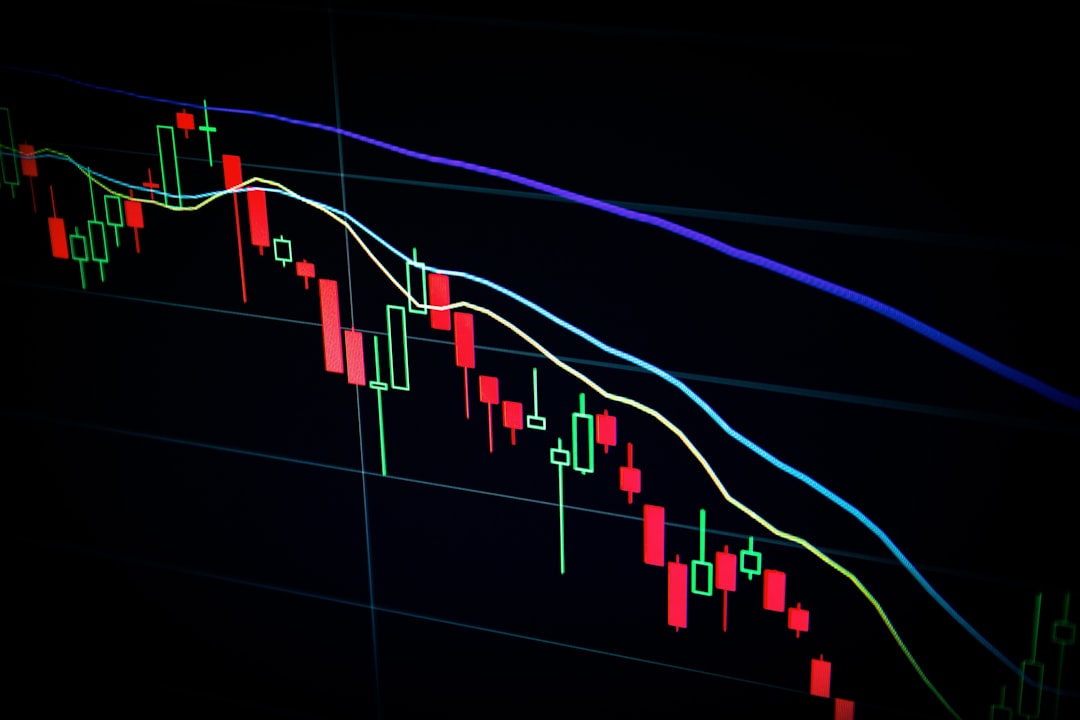
How Risk Management Separates Traders From Gamblers
The difference between a professional trader and a gambler isn't about market knowledge or technical analysis skills—it's about risk management. While both face uncertainty and take calculated chances, traders employ systematic risk controls that transform speculation into a sustainable profession. This article reveals the critical risk management principles that separate consistent traders from those who treat the markets like a casino.
The Mathematical Foundation of Trading Success
Professional traders understand that long-term profitability depends on mathematics, not luck. A gambler might risk their entire account on a single trade hoping for a big win, while a trader risks only 1-2% per position. This fundamental difference creates entirely different outcome trajectories.
Consider two traders with $10,000 accounts. The gambler risks $2,000 per trade (20%), while the professional risks $200 (2%). After five consecutive losses—which happens to everyone—the gambler has $3,277 left and needs a 205% return to recover. The professional has $9,039 remaining and needs only 10.6% to break even.
Position sizing mathematics ensures that no single trade can destroy your account. Traders calculate their risk based on:
- Account size and available capital
- Distance to stop-loss in pips or percentage
- Maximum acceptable loss per trade
- Correlation between open positions
Risk-Reward Ratios: The Trader's Edge
Gamblers chase wins without considering the relationship between risk and potential reward. Traders, however, only enter positions where the potential profit exceeds the potential loss by a predetermined ratio—typically 1:2 or higher.
A trader risking $100 to make $200 maintains a 1:2 risk-reward ratio. This means they can be wrong 50% of the time and still break even before costs, or profitable after achieving a 40% win rate. Gamblers typically accept unfavorable ratios, risking $200 to make $100, which requires an unrealistic 67% win rate just to break even.
| Approach | Risk/Trade | Win Rate Needed | Recovery From Loss |
|---|---|---|---|
| Gambler | 10-20% | 65-70% | Nearly impossible |
| Trader | 1-2% | 35-45% | Manageable |
| Professional | 0.5-1% | 30-40% | Quick recovery |
Emotional Control Through Pre-Defined Rules
Risk management transforms trading from an emotional activity into a rule-based process. Traders define their maximum daily loss, weekly drawdown limits, and position size calculations before entering any trade. Gamblers make decisions in the moment, influenced by recent wins, losses, or the fear of missing out.
This systematic approach provides psychological benefits. When a trader hits their daily loss limit of 6%, they stop trading—no exceptions. This prevents the revenge trading and doubling-down behavior that destroys gambler accounts. The rules remove emotion from the equation.
Pre-defined risk parameters include:
- Maximum percentage risk per trade
- Daily and weekly loss limits
- Maximum number of concurrent positions
- Account drawdown thresholds that trigger trading pauses
Diversification and Correlation Management
Professional traders understand that multiple uncorrelated positions reduce overall portfolio risk. Gamblers often concentrate their capital in one or two highly correlated positions, amplifying their exposure without realizing it.
Trading three currency pairs that all move together (like EUR/USD, GBP/USD, and AUD/USD) creates hidden leverage. If the US dollar strengthens, all three positions move against you simultaneously. Traders diversify across different asset classes, timeframes, and strategies to ensure one market event doesn't destroy their account.
Effective diversification means spreading risk across currencies, commodities, indices, and cryptocurrencies while monitoring how these assets correlate during different market conditions. This approach ensures that portfolio risk remains within acceptable parameters even during volatile periods.
The Survival Imperative
The ultimate goal of risk management is survival. Traders who survive long enough to learn from their mistakes, refine their strategies, and develop genuine edge eventually become profitable. Gamblers who blow up their accounts in weeks or months never reach this stage.
Risk management isn't about avoiding losses—it's about controlling them. Every professional trader has losing trades and losing periods. What separates them is their ability to keep losses small, protect their capital during drawdowns, and remain in the game long enough for their edge to materialize over hundreds of trades.
Remember: you can't profit from opportunities you can't take because you've run out of capital. Protecting your trading account is protecting your ability to participate in future opportunities.
Risk management transforms trading from gambling into a profession by applying mathematical principles, maintaining favorable risk-reward ratios, enforcing emotional discipline, and ensuring survival through drawdowns. Implement these principles consistently, and you'll join the small percentage of traders who achieve long-term success. Start by calculating your proper position size for your next trade based on a 1-2% maximum risk rule.